
Unlocking the benefits of online access to prescription medicines
Call to Action
In a connected Europe, no patient should face interruptions in access to the treatment essential to their well-being,
especially the medicines they have been prescribed, regardless of their location, ability to travel, or unforeseen changes in
their health.
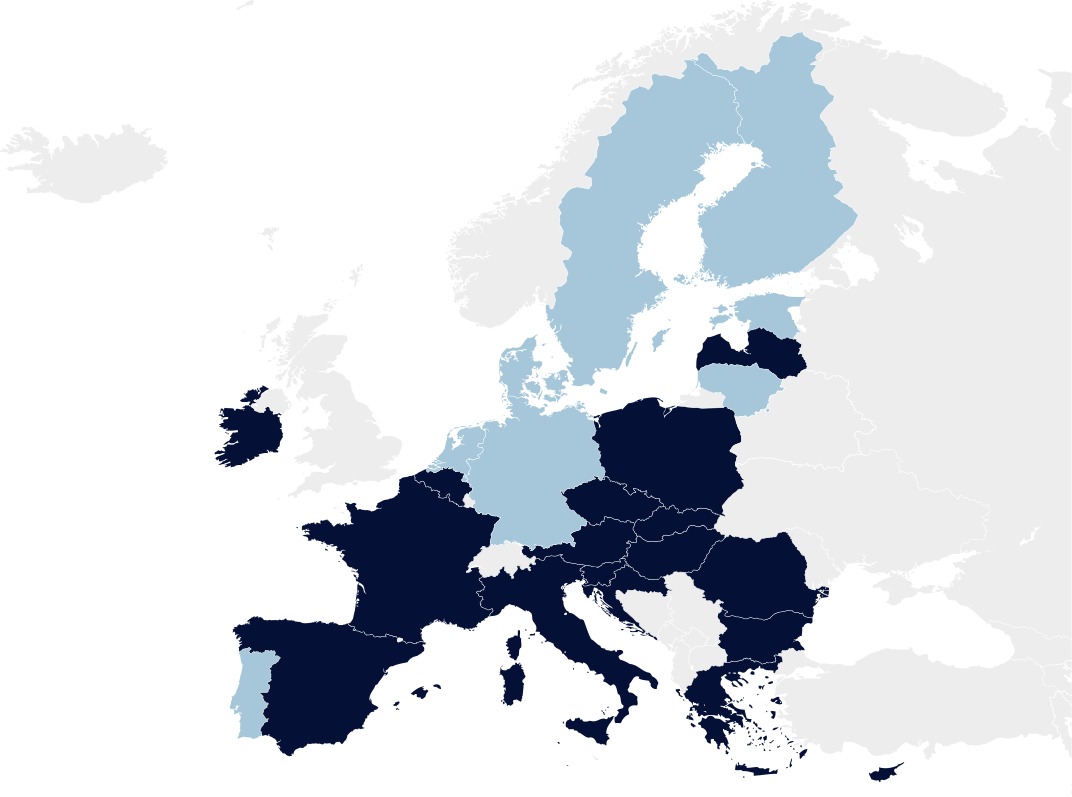
Online access to prescription medicines through registered online pharmacies has been a safe and secure reality in eight EU
Member States (as well as Iceland, Norway, Switzerland and the UK) for many years now. However, this means that 19
Member States currently deny their citizens this benefit, thereby preventing patients from having the freedom to choose
how to obtain their medication. This stands in contrast with the online accessto non-prescription medicine (OTC), which has
been authorised by law in all EU Member States since 2015.

A major study published by the independent research group, Copenhagen Economics in January 2024 clearly revealed the significant benefits of digital access to prescription medicines, particularly for people with chronic illnesses and those living in rural areas. These patients and their carers often face challenges, such as long distances to a physical pharmacy, mobility limitations or time constraints. Offering the option for medicines to be safely delivered to their homes would not only enhance their well-being but also strengthen continuity of care by improving treatment adherence. Poor adherence — which costs Europe an estimated EUR 125 billion annually and contributes to 200,000 premature deaths each year — is often driven by:
- Medicine not in stock in the pharmacy
- Forgetting to refill the medicine
- A lack of time to obtain or refill prescriptions
Digital access directly addresses these barriers, ensuring patients can manage their treatment conveniently, reliably and
without interruption.
Digital access and telepharmacy can help strengthen health system resilience, especially as Europe faces a growing healthcare workforce crisis and persistent geographical and staffing barriers. By enabling patients to consult with pharmacists remotely and receive medicines at home, healthcare systems can deliver safe, high-quality care more efficiently and equitably. This model has been successfully implemented in countries like Denmark, Sweden, Finland, the Netherlands, Germany, Lithuania, Estonia and Portugal, where it has been in place for many years and is now a well-established component of the healthcare system.
The EU has already passed legislation that ensures safe and secure online dispensing of medicines.
The 2011 Falsified Medicines Directive:
- Introduces safety features, allowing for the authentication of each prescription medicine pack — whether online or offline — to prevent falsified medicines reaching patients’ hands.
- Obliges all pharmacies offering medicines via the Internet to display the EU Common Logo on each page of the pharmacy website, which links to a national register, enabling patients to identify the legitimate pharmacy with a simple click.
During recent years, many EU countries have also adopted electronic prescription systems, providing the means to authenticate prescriptions digitally. In addition, other EU legislations, currently in their implementation phase, such as the European Health Data Space (EHDS) and the EU Digital Identity (eID) Wallet, establish the necessary interoperability standards and infrastructure to enable patients to authenticate services digitally and safely access their health data. These developments are essential for enabling secure and seamless cross-border digital health services across the EU.
This means the digital infrastructure needed to ensure the safe online dispensing of prescription medicines is already in place. Yet in 19 Member States, prohibitions persist, preventing patients from benefitting fully from this proven digital option and from improved access to healthcare. The sooner the public becomes informed about reliable sources for obtaining their medicines safely online, the sooner the battle against falsified medicines will be won.
It is now very clear that the time is right to leverage the momentum around digitalisation of health services to enable all patients across the EU to have equal access to prescription medicines wherever they are.
MEP Vytenis Andriukaitis (S&D, LT) and MEP Kristian Vigenin (S&D, BG) endorse the need for patients to obtain their prescription medicines via the Internet.
Call to Action
The Online Order and Home Delivery of Medicines Alliance (OnHOME) is a group of patient organisations and healthcare stakeholders determined to advocate for all Member States to allow their patients the choice to obtain their prescription medicines online and get them delivered at home by registered pharmacies.
We therefore call on EU policymakers to:
- Recognise digital access to prescription medicines as a core pillar of continuity of care, cross-border health access, and healthcare system resilience.
- Encourage Member States to remove outdated restrictions — no longer aligned with current practices or technological advancements — that prevent patients from obtaining medicines safely online from registered pharmacies, with home delivery, coupled with safe pharmaceutical advice.
- Ensure EU-wide interoperability through the EHDS and EU Digital Identity Wallet so that patients can access and manage their prescriptions wherever they are.
- Promote telepharmacy services to increase access to remote professional pharmacy care and relieve pressure on the healthcare workforce.
- Build public trust by educating patients on safe digital access options and the EU Common Logo for registered e- pharmacies.


















Join us to Unlock the Benefits for the EU Citizen!
Online order and Home delivery of Medicines Coalition (OnHOME) aims to promote a collective and comprehensive action plan to enable patients to get their prescription medicines delivered at home via pharmacies, regardless of their nationality
or place of residence.
The alliance firmly believes that this initiative goes hand in hand with the EU’s digital transformation efforts in the healthcare
arena.
The objective is to continually expand the alliance partners, and we invite you to consider joining the OnHOME alliance
because together, we are stronger.
Testimonials
Unlocking the benefits of online access to prescription emdicines across the EU
- We compare the pharmacy experiences of European Union citizens in countries where online access to prescription medicines is permitted (Sweden and Germany) to thoses in countries where it is prohibited (France, Italy, and Spain)
- We gather evidence through a consumer survey (5,000 participants) supported by 25 in-depth interviews with chronic patients, 25 with pharmacy owners, and 3 with experts affiliated with patients' organisations

Convenience benefits including flexible ordering and avoiding pharmacy visits
- 56% of respondents in Sweden already use this service
- Between 69% and 84% of respondents value ordering at any time
- Between 67% and 80% of respondents value access to a delivery service
- 15 minutes estimated average time saved per transaction
Improved health of chronic patients due to increased medication adherence
- Respondents attribute non-adherence to unavailable medicine, forgetting refills, and time constraints
- 64% of chronic patients experiencing time constraints belience online access would improve adherence
- 57% or respondents who used online dispensing believe that online access helps to improve their adherence
Lack of experience and awareness inhibit patients from using online pharmacies
- 75% of respondents in countries with prohibited online access are unaware of the mandatory EU common logo, designed to identify authorised online pharmacies
- 53% of respondents are not aware that online pharmacies use the same safe and secure supply as physical pharmacies
Increased use and information enhances patients' confidence in digital pharmacy services
- Reduced concerns about safety issues and delivery are significantly lower in countries with line access
- Informing respondents about the EU common logo and the regulatory framework is the same as for physical pharmacies increases confidence in online dispensing of prescription medicines
Enhance medicine availability online
Encourage EU regulators to take the necessary steps towards allowing online access to prescription medicines by amending Article 85(c) in the Community Code of Medicinal Products for Human Use, which regulates the sale of medicinal products at a distance to the publix; and encourage EU Member States to provide for regulated options in national laws.
Boost medicine accessibility online
Increase awareness of secure supply-chain safeguards for pharmaciese operating online to enhance trust and prevent the risks associated with the use of unauthorised sites and falsified medicines.
Facilitate the digital expansion of pharmacy operations
Enable online access to incentivise more pharmacies in more EU Member States to adopt omnichannel strategies, meeting patient demands and improving healthcare outcomes.
The report’s findings underscore the need for improved access to prescription medicines
In addition, it is alarming to note that over 36,000 websites are currently selling falsified medicines to a largely unsuspecting public. Only when the public is educated about where to access genuine prescription medicines will this scourge be better controlled. This is one of the major reasons why ASOP EU commissioned this important report.